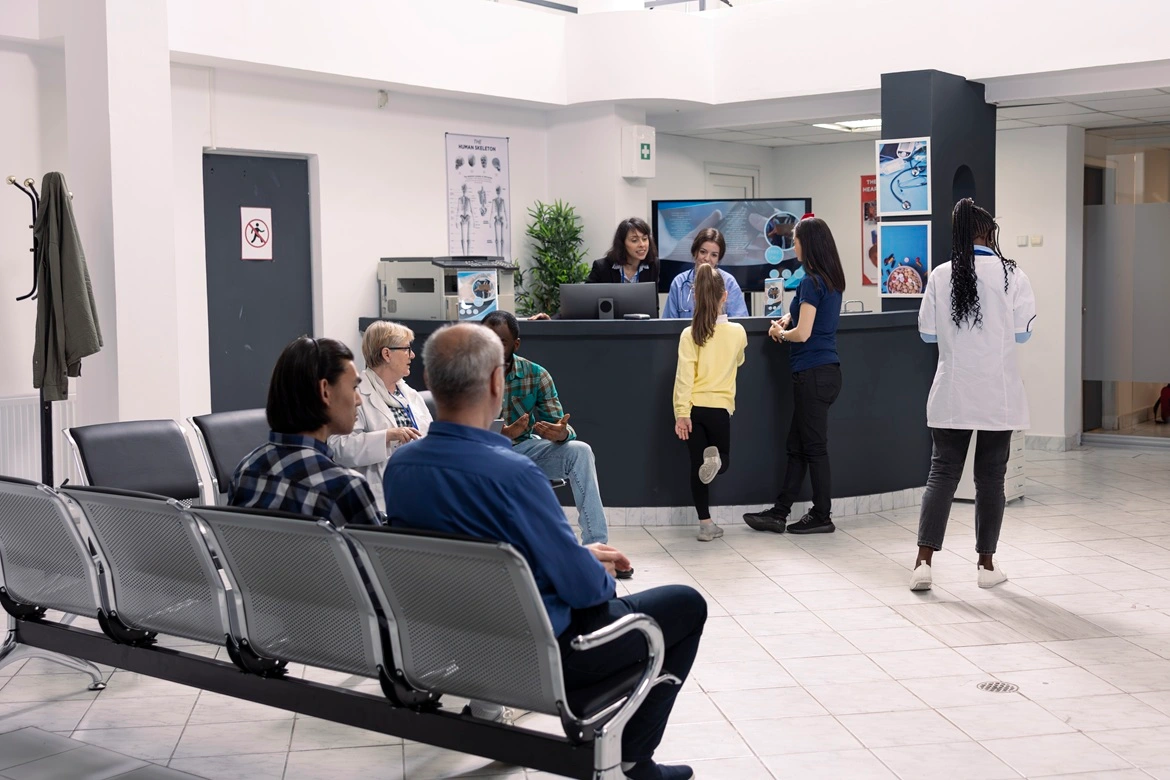
Every hospital outpatient department runs on a quiet promise: you will be seen, and you will be seen on time. Keeping that promise is hard enough when everyone arrives with a booking. Add patients who simply walk through the door, and the promise starts to strain. Balancing scheduled appointments with walk-in demand is one of the most persistent operational challenges in healthcare, and understanding why it is so difficult is the first step toward fixing it with the right healthcare queue management.
Two Patient Types, Two Very Different Expectations
Appointments of patients and walk-in patients arrive with different assumptions about how care should work.
Patients with appointments expect predictability. They have arranged work, childcare, or transport around a specific time slot, and a long wait feels like a broken agreement. Walk-in patients, by contrast, value access. They may have sudden symptoms, no regular doctor, or no ability to plan ahead. For them, the real question is not “When is my slot?” but “Will anyone see me today?”
Both expectations are reasonable. The trouble is that a single pool of doctors, nurses, rooms, and equipment must satisfy both at the same time.
The Core Problem: Predictable Supply Meets Unpredictable Demand
Appointments are built on a simple idea: divide a clinician’s day into fixed slots and fill them. It works well because demand is controlled in advance. Walk-ins break that logic. Nobody can say exactly how many will arrive on a given Tuesday, or whether they will need a five-minute prescription check or a forty-minute assessment.
Hospitals typically respond in one of three ways, and each one carries a cost:
- Overbook the schedule to absorb walk-ins, which pushes scheduled patients behind and creates delays for the people who did everything right.
- Reserve empty slots for walk-ins, which protects access but leaves expensive clinician time idle when walk-in volume is low.
- Separate the two streams entirely, which sounds clean but duplicates staff and space that many hospitals simply do not have.
There is no free option. Every choice trades one kind of inefficiency for another.
Variability Is the Hidden Enemy
Even a perfectly staffed department struggles with variability. Consultation lengths differ. Some patients arrive late, others early, and a share never arrives at all. Walk-in surges often cluster around Monday mornings, after public holidays and during seasonal illness peaks. A single complex case can delay an entire clinic session, and that delay compounds through every patient who follows.
When scheduled and unscheduled patients share the same queue, this variability multiplies. One unexpected arrival does not just add one person to the list. It shifts everyone’s expected wait, and it often triggers the very frustration hospitals are trying to avoid.
The Fairness Dilemma at the Front Desk
Operational problems quickly become human ones. Imagine a patient who booked weeks ago, watching someone who arrived twenty minutes ago get called in first because their symptoms looked more urgent. Clinically, that may be exactly the right decision. Emotionally, it feels unfair.
Front-desk staff end up absorbing this tension. Without a clear, visible, and consistently applied priority system, they are forced to improvise, explain, and sometimes defend decisions to anxious patients. That is stressful for staff and erodes trust among patients, even when the care itself is excellent.
Triage Adds Another Layer
Walk-in patients cannot be treated as a uniform group. Some need urgent attention, while others have minor concerns that could have waited. Appointment of patients may also deteriorate while waiting. A fair system must weigh clinical urgency, appointment time, and arrival time together, and those three factors do not always point in the same direction.
Manual juggling of these priorities works at low volume. At scale, it becomes guesswork, and guesswork leads to uneven waits, missed escalations, and overcrowded waiting areas.
The Cost of Getting It Wrong
Poor balance has consequences well beyond irritation:
- Longer waits and crowded waiting rooms, which hurt patient satisfaction and can raise infection risk.
- Higher no-show and walk-out rates, which waste capacity and leave patients without care.
- Staff burnout, as teams absorb constant pressure from an unpredictable flow.
- Underused resources, when slots sit empty at one moment, and queues overflow the next.
These problems feed each other. Long waits discourage booking, which pushes more people toward walk-ins, which makes the flow even less predictable.
What Actually Helps
Hospitals cannot eliminate walk-ins, nor should they. Walk-in access is a vital safety valve, especially for patients who face barriers to booking. But the balance can be improved with a few practical shifts.
Use data to set up capacity. Historical arrival patterns reveal when walk-ins peak. Reserving flexible capacity at those times, rather than guessing, reduces both idle time and overflow.
Run one unified queue. Treating appointments and walk-ins as separate lists invites conflict. A single, rules-based queue that accounts for appointment time, arrival time, and clinical priority keeps decisions consistent and transparent.
Be honest about wait times. Patients tolerate waiting far better when they know how long it will be. Live wait estimates, digital check-in, and virtual queuing turn an anxious unknown into a manageable expectation.
Free staff from manual coordination. When software handles queue ordering and updates, front-desk teams can spend their energy on patients rather than negotiating the line.
Review and adjust continuously. Demand shifts with seasons, local events, and population changes. Regular review of wait data keeps the model aligned with reality.
Balance Is a System, not a Single Fix
The struggle to balance appointments and walk-ins is not a sign that hospitals are poorly run. It reflects a genuine structural tension between planned and unplanned demand. The hospitals that manage it best are not the ones that choose one model over the other. They are the ones that build a flexible, transparent system around both, using real data, clear priority rules, and good communication.
When patients can see where they stand, staff can trust how the queue is ordered, and capacity matches actual demand. The old promise becomes achievable again: you will be seen, and you will be seen fairly.
See how Zuna handles appointments and walk-ins in one queue. Book a demo, and we will walk through your OPD flow.