Every hospital manages a queue, whether it plans to or not. The only question is whether that queue is managed deliberately or left to chance. For decades, the answer was a clipboard, a register, or a row of paper tokens. Today, digital queue management is reshaping what patients expect and what hospital teams can deliver.
So which approach is right for your hospital? Let’s compare them honestly, and look at what separates a good digital system from a truly premium one.
How Manual Queue Management Works
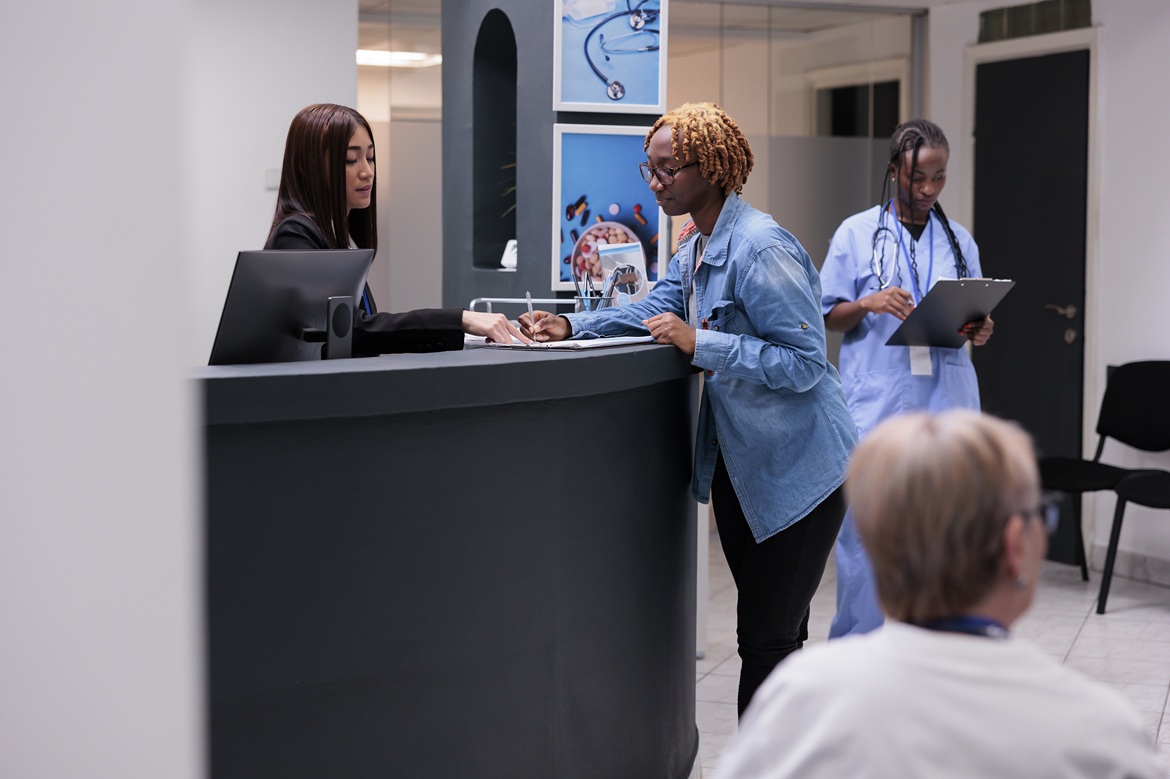
Manual systems are familiar. Patients register at a desk, receive a paper token or a verbal instruction to wait, and listen for their name to be called. Staff track the order using lists, notebooks, or spreadsheets.
There is a reason these methods survive. They are cheap to start, need no training, and work during power cuts. For a very small clinic with low patient volume, they can be perfectly adequate.
But the cracks appear quickly as volume grows.
Where Manual Systems Break Down
Uncertainty for patients: Without clear information, patients do not know how long they will wait or whether they have been forgotten. They crowd the desk to ask, which creates more pressure for staff.
Disputes over fairness: Paper tokens get lost, names get misheard, and priority cases cut through without explanation. Each incident chips away at trust.
No data: Manual systems record almost nothing. Leaders cannot see average wait times, peak hours, or which services run slowest, so decisions rely on guesswork.
Crowded, stressful waiting areas: Everyone must wait in person, which fills corridors and raises tension for patients and staff alike.
Heavy workload on front-desk teams: Staff spend their day coordinating, answering repeated questions, and handling complaints instead of helping patients.
What Digital Queue Management Changes
A digital hospital queue management system replaces guesswork with structure. Patients check in through a kiosk, a mobile device, or the front desk. The system places them in the right queue, applies priority rules, and keeps everyone updated automatically.
The benefits are tangible:
- Transparency. Patients see their place in line and an estimated wait.
- Remote waiting. Patients can wait anywhere comfortable and return when called, easing crowding.
- Fairness. Consistent rules reduce disputes and protect trust.
- Smarter operations. Every ticket and service time becomes data that leaders can act on.
- Calmer teams. Automation handles the repetitive coordination so staff can focus on care.
For most hospitals, these gains translate into shorter perceived waits, fewer complaints, and a more professional impression from the first minute.
The Honest Comparison
Factor | Manual | Digital |
Upfront cost | Low | Higher, with long-term returns |
Patient visibility | None | Live place in line and updates |
Crowd control | Poor | Strong, with remote queuing |
Data and reporting | Minimal | Detailed analytics |
Fairness and priority handling | Inconsistent | Rule-based and consistent |
Scalability | Limited | Grows with your facility |
Staff workload | High | Reduced |
Manual may look cheaper on paper, but the hidden costs are real: wasted staff time, lost patient goodwill, and operational blind spots.
Not All Digital Systems Are Equal
Choosing digital is only half the decision. The market is crowded, and many solutions look alike in a brochure. The differences show up in daily use.
Some vendors supply only software and leave you to source kiosks and displays elsewhere, which means compatibility issues and no single party accountable when something fails. Others offer strong hardware but shallow software. Many are built for generic customer service rather than the pressures of healthcare, and few look beyond the queue to the wider operation.
A hospital cannot afford a system that almost works.
Where Zuna QMS Stands Apart
Zuna QMS was designed as a complete solution for healthcare, not a single feature with a price tag.
Hardware and software from one provider: Zuna delivers the full system, from kiosks and displays to the platform that runs them. One partner means one point of accountability and a system designed to work as a whole.
Virtual queuing for modern patients: Patients can join and track their place remotely, reducing crowding and giving them freedom while they wait.
Real-time updates for patients and staff: Clear communication replaces uncertainty, and teams stay aligned without constant manual coordination.
Analytics that lead to action: The dashboard shows where bottlenecks form, when demand peaks, and how services perform, so improvement becomes part of daily operations.
Built for healthcare workflows: Hospitals, clinics, and labs each run differently. Zuna Health is built around those realities, and its wider ecosystem, including Zuna OR Planner, extends the same operational thinking to scheduling and theatre management.
That combination of complete delivery, patient-friendly design, and healthcare focus is what makes Zuna QMS a true all-rounder.
So, Which Is Right for Your Hospital?
Ask yourself a few direct questions:
- Do patients regularly crowd the waiting area or the front desk?
- Do you lack reliable data on wait times and service performance?
- Do disputes about fairness or priority come up often?
- Are your front-desk staff overloaded with coordination work?
- Are you planning to grow, add services, or open new locations?
If you answered yes to even two of these, manual management is already costing you more than it saves. A digital system is not a luxury at that point. It is the next logical step.
And if you are going digital, choose a partner that offers the full picture: hardware, software, analytics, and healthcare expertise, backed by a team that treats your patient flow as seriously as you do.
Make the Move with Confidence
The waiting room is where patients first judge your hospital. Give them a system that respects their time, supports your staff, and gives your leadership the data to keep improving.
Ready to see the difference? Book an appointment with the Zuna team and discover how Zuna QMS can turn your queue into one of your hospital’s strongest advantages.