
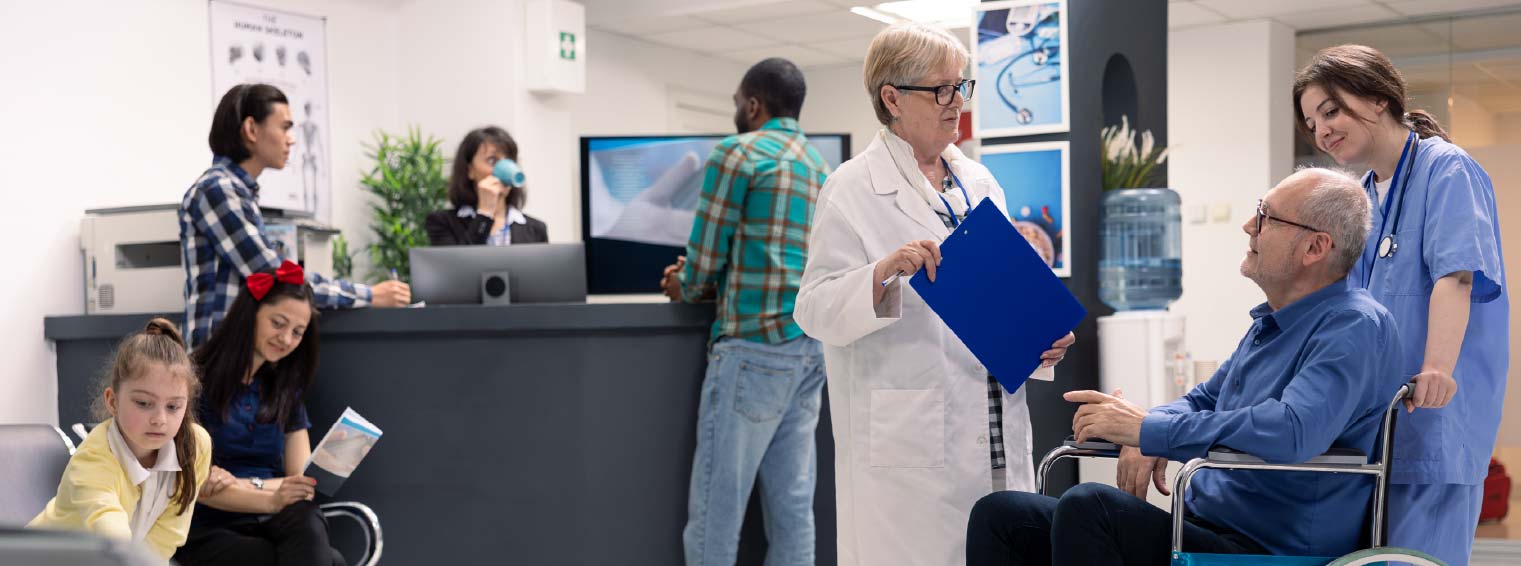
Outpatient departments (OPDs) are often the busiest part of a hospital. Every day they handle scheduled consultations, walk-ins, registrations, follow-ups, and referrals, all at once. When arrivals exceed what the department can serve, waiting areas fill up, queues stretch, and every team starts working under pressure.
Overcrowding is usually treated as a space problem. It is really a patient flow problem, and good OPD management starts with understanding where the flow breaks.
Why OPDs Become Overcrowded?
Rarely is there a single cause. Most crowded OPDs share a mix of the following:
- Unpredictable arrivals. Walk-ins cluster in peak hours and push demand past capacity.
- Consultations that run long. One extended case delays every appointment after it.
- Manual registration and queues. Paper tokens, registers, and shouted names slow patients down and make queues hard to track.
- Uneven staff allocation. Some counters are swamped while others have spare capacity.
- No real-time visibility. Without live data on volumes and waiting times, administrators spot bottlenecks only after they have escalated.
One Bottleneck, Many Delays
The less obvious problem is that an OPD visit is not one queue. It is a chain of them: registration, consultation, diagnostics, billing, and pharmacy. Each stage has its own line, its own staff, and its own delays, and they rarely talk to each other.
That is why a slow registration counter does not just delay registration. It pushes consultations back, which bunches patients at the diagnostics lab, which stretches billing and pharmacy later in the day. A patient can reach the doctor on time and still spend most of the visit waiting between steps.
Patients unfamiliar with the hospital feel this most. They are unsure which counter comes next; they walk back and forth, and they miss steps. Crowding in one corner of the OPD quietly becomes crowding everywhere.
What Overcrowding Does to Patients
For patients and the people who accompany them, the impact goes beyond a long wait. Uncertainty about how long it will be, and what happens next, adds frustration, especially for elderly patients, people with limited mobility, and parents with children. Even when the clinical care is good, a disorganised visit shapes how patients remember the hospital, and whether they return for follow-ups.
What It Does to Hospital Efficiency
Behind the waiting room, the same congestion costs the hospital in several ways:
- Lost staff time. Teams spend hours answering, “How long will it be?” and managing registers instead of serving patients.
- Poor use of capacity. One department overflows while another sits idle, because nobody can see both at once.
- Delays that compound. A bottleneck at one stage slows every stage after it.
- Little data to learn from. Manual processes make it hard to measure waiting times or find the recurring peaks.
How Hospitals Can Reduce OPD Overcrowding
Adding waiting-room space treats the symptom. These steps address the causes:
- Set realistic schedules. Use arrival patterns and actual consultation lengths to avoid bunching.
- Coordinate appointments and walk-ins. Clear queue rules that respect clinical urgency keep both groups moving. We cover this in detail in balancing appointment and walk-in patients.
- Simplify registration. Digital check-in and self-service kiosks cut repetitive front-desk work.
- Track patients across departments. Watch movement from consultation to diagnostics, billing, and pharmacy, not just the first queue.
- Tell patients what to expect. Display boards and SMS updates replace uncertainty with a clear next step.
- Plan staffing around demand. Historical and real-time data show when to add capacity, and where.
Where Digital Queue Management Fits
A digital hospital queue management system brings these steps together: digital tokens, appointment and walk-in workflows, virtual queuing, SMS notifications, self-service check-in and live queue displays, with dashboards that show administrators where waits build up. Capabilities depend on configuration and integration needs.
Technology works best alongside sound processes, adequate staffing and clear clinical priority rules. It makes the OPD visible and manageable, but it does not replace those basics.
Zuna supports structured single-service, multi-service, and sequential queues, so hospitals can organise the whole OPD journey rather than a single counter. If you want to see how that would work in your OPD, request a demo.
A Better OPD Experience Starts with Better Flow
Overcrowded OPDs affect patient satisfaction, staff productivity, and hospital efficiency, and the delays rarely stay in one place. Hospitals that improve scheduling, coordinate walk-ins, simplify registration, and use data to find bottlenecks can move toward a calmer, more predictable OPD for patients and staff.
Frequently Asked Questions
What causes overcrowding in hospital OPDs?
Common causes include unpredictable walk-in demand, consultations that run long, manual registration, disconnected department queues, uneven staffing, and limited real-time visibility.
How does OPD overcrowding affect patients?
Long waits, unclear instructions, and crowded waiting areas increase frustration and can reduce confidence in the hospital, even when clinical care is good.
How can hospitals improve OPD management?
By optimising schedules, coordinating appointments and walk-ins, simplifying registration, tracking patient movement across departments, and reviewing waiting-time data regularly.
How does a queue management system reduce OPD congestion?
It organises arrivals, tracks queues across service points, keeps patients informed, and produces reports that help administrators find and fix bottlenecks.
Can queue management software fix overcrowding on its own?
No. It works best with realistic scheduling, adequate staffing, and clear priority rules. The software provides visibility and coordination; the hospital’s processes still matter.