
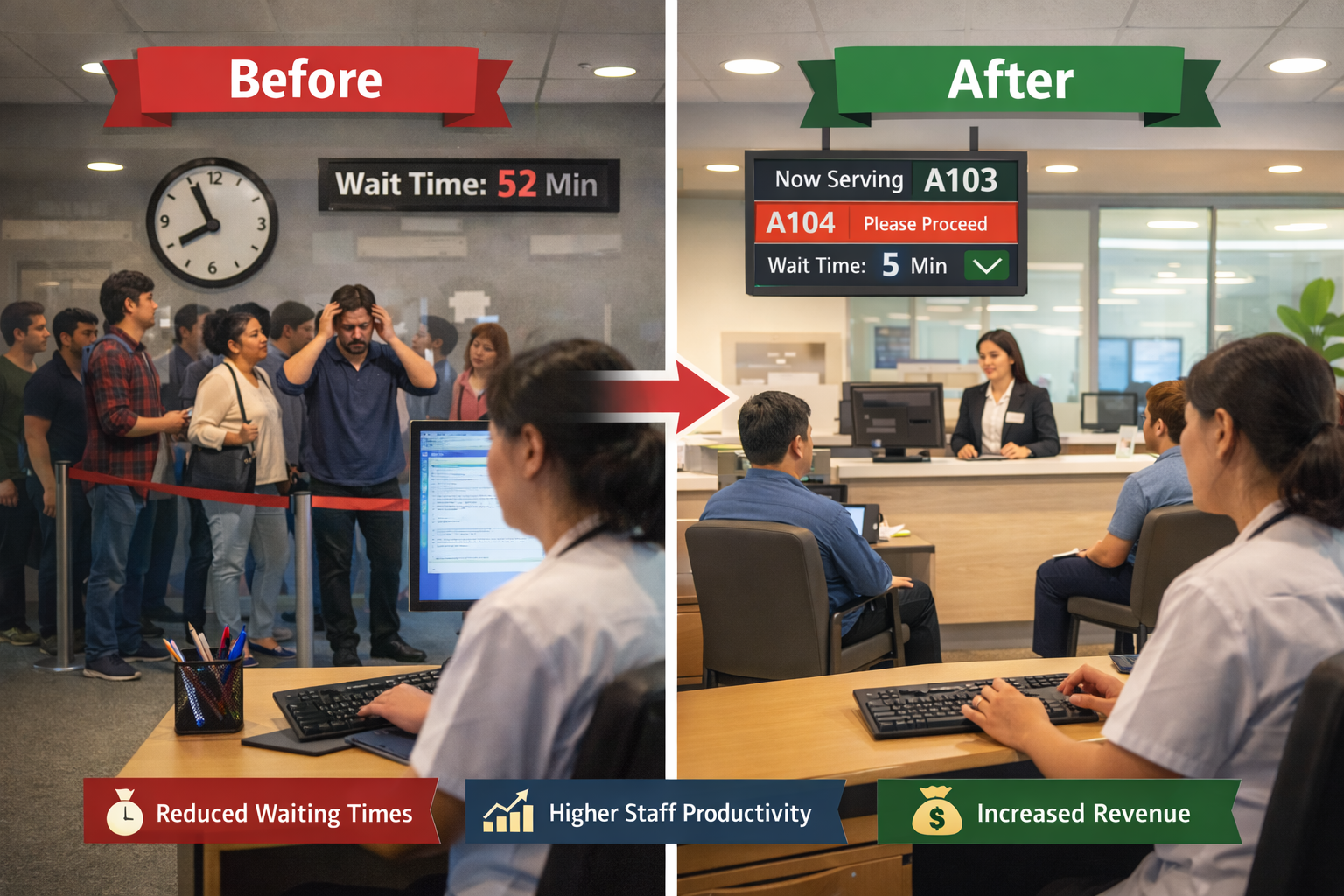
In service-driven environments such as hospitals, banks, retail stores, and public service offices, managing customer flow efficiently is critical for both operational performance and revenue. While queues may appear to be a simple operational detail, inefficient queue management can significantly affect both revenue and productivity.
Long waiting times, unclear service orders, and poorly coordinated service flow not only frustrate customers but also reduce staff efficiency and limit organizational growth.
Many organizations underestimate these impacts, but studies and real-world experience confirm that the hidden costs of poor queue management extend far beyond simple customer dissatisfaction.
The Operational Impact of Poor Queue Management
Queues that are unmanaged or poorly structured can create bottlenecks that ripple through the entire organization. Staff are forced to manually organize lines, answer repetitive questions, and resolve disputes, reducing the time available for delivering actual services.
In today’s fast-paced service environments, queue management is no longer optional. Organizations that fail to structure customer flow risk losing revenue, reducing staff productivity, and dissatisfied clients.
How Queue Management Improves Revenue and Productivity
Modern queue management systems do far more than organize waiting lines—they directly impact the bottom line. Here are the key ways these systems improve operational and financial performance:
- Reduced Customer Abandonment
Unpredictable waiting times are a leading cause of customer abandonment. When customers leave before completing a service transaction, organizations lose potential revenue.
Digital queue systems provide real-time updates on queue position and expected wait times, reducing uncertainty. Customers are more likely to remain in the queue and complete their transactions, helping organizations capture revenue opportunities that would otherwise be lost.
- Faster Service Through Organized Customer Flow
Manual queues and unstructured waiting lines slow down service delivery. Staff must constantly manage crowding while serving customers, creating inefficiencies and stress.
By organizing customers into structured digital queues, queue management systems ensure staff can focus on delivering services rather than managing lines. Many organizations discover they can reduce wait times without expanding infrastructure, improving throughput, and operational efficiency.
- Improved Staff Productivity
Employees perform better in structured environments. Unclear or disorganized queues often lead to interruptions, as staff are repeatedly asked about waiting times or service orders.
Digital queue management systems reduce these interruptions through automated notifications and digital dashboards, allowing employees to focus on providing high-quality service. The result is higher productivity and better utilization of staff resources.
- Better Operational Planning
Modern queue management systems provide analytics and real-time insights into service demand, including peak hours, average waiting times, and counter utilization.
Armed with this data, managers can allocate staff more efficiently, balance workloads across departments, and optimize service flow. Efficient planning reduces unnecessary labor costs and maximizes service capacity.

Signs Your Organization Needs a Queue Management System
Many organizations continue using manual processes even when they create operational inefficiencies. If your organization experiences any of the following, it may be time to adopt a queue management system:
- Long customer waiting times
- Overcrowded waiting areas
- Staff struggling to manage service counters
- Customers frequently ask about their position in line
- Lack of visibility into service performance
These challenges align with the operational indicators explained in our guide on 10 signs your organization needs a queue management system.
Why Queue Management Is a Strategic Investment
Efficient queue management goes beyond operational convenience—it is a strategic tool for organizations looking to maximize revenue and productivity.
- Revenue Protection: Reduces abandoned services and missed transactions
- Staff Efficiency: Frees staff from managing queues and allows focus on service delivery
- Customer Retention: Improves satisfaction, loyalty, and repeat visits
- Operational Insights: Provides real-time data to adjust staffing and service flow dynamically
Organizations that invest in digital queue systems often experience measurable improvements in both service throughput and employee performance.
Conclusion
Efficient queue management is critical for any organization that serves high volumes of customers or patients. By reducing waiting times, improving staff productivity, and providing real-time operational insights, modern queue management systems help organizations protect revenue, increase efficiency, and enhance the customer experience.
For organizations managing multiple service points, digital queue systems are no longer optional—they are a strategic necessity for maintaining operational excellence.
How ZUNA QMS Can Help
ZUNA QMS provides a modern queue management platform designed for service-driven organizations. With ZUNA, you can:
- Digitize queues across multiple departments
- Monitor real-time service flow
- Reduce waiting area congestion
- Improve staff productivity
- Deliver a better customer experience
By transforming waiting into a structured and transparent process, ZUNA QMS helps organizations operate more efficiently while maximizing revenue potential.
Book a demo today to see how ZunaQMS can help your organization improve productivity and revenue.