
In today’s fast-paced service environment, waiting is unavoidable—but frustration doesn’t have to be. Whether customers visit a hospital, bank, retail store, or public service office, they expect fast, organized, and transparent service.
Traditional waiting lines often create confusion, overcrowding, and dissatisfaction. Customers may feel uncertain about how long they will wait, while staff struggle to manage service flow efficiently.
This is where smart queue systems are redefining service excellence. By using a digital queue management system, organizations can transform the waiting experience into a structured and efficient process.
Modern businesses increasingly recognize that wait times directly impact the customer experience. In fact, many service organizations now consider waiting time a critical performance indicator.
The Problem with Traditional Queues
For decades, organizations relied on simple physical queues. Customers stood in line and waited until it was their turn to be served.
While this method may seem straightforward, it creates several operational problems:
- Long and unpredictable wait times
- Overcrowded waiting areas
- Customer frustration
- Staff inefficiencies
- Lack of service visibility
Many organizations underestimate the operational and financial impact of poor queue management. In high-volume service environments, the hidden cost of poor queue management can include lost customers, reduced productivity, and lower service satisfaction.
Without proper queue systems, managing peak service hours becomes difficult, and organizations struggle to maintain service quality.
What Are Smart Queues?
Smart queues use digital technology to organize and manage customer flow more efficiently.
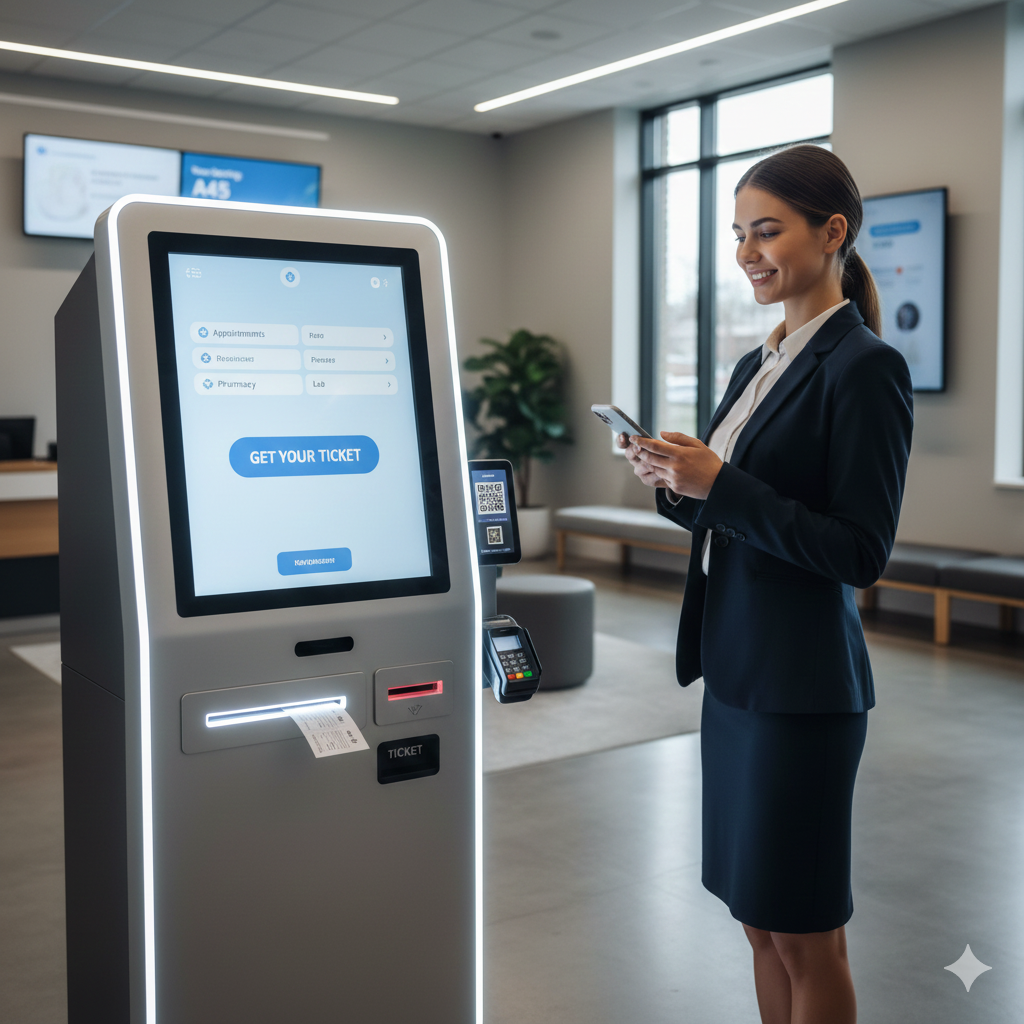
Instead of standing in a physical line, customers join a digital queue through multiple channels, such as:
- Self-service kiosks
- Mobile check-in
- QR code scanning
- Online appointment systems
Once customers join the queue, they receive real-time updates regarding their position in line, estimated wait time, and service counter information.
This approach creates a more transparent and organized service experience for customers while giving organizations better control over service operations.
Key Features of Smart Queue Systems
Smart queue management systems include several features that help improve operational efficiency and customer satisfaction.
Digital Token Systems
Customers receive a digital ticket or token number when they check in. This eliminates confusion and ensures customers are served in an orderly sequence.
Real-Time Queue Monitoring
Modern queue management systems allow staff and managers to monitor queue activity in real time.
Managers can track queue length, waiting time, and service performance metrics to make better operational decisions.
Mobile Queue Management
One of the biggest advantages of smart queues is the ability to join a queue remotely.
Customers can register through their smartphones and receive notifications when their turn is approaching.
Organizations that implement digital queue systems often discover they can reduce wait times without expanding infrastructure, which significantly improves operational efficiency.

How Smart Queues Improve Service Excellence
Smart queues go beyond simply organizing waiting lines. They help organizations deliver better service experiences.
Better Customer Experience
Customers value transparency and predictability. Knowing their queue position and expected wait time reduces uncertainty and frustration.
Reduced Wait Time
Smart queues distribute customers more effectively across service counters, helping organizations optimize service flow and minimize idle time.
Improved Staff Productivity
Service teams can focus on helping customers rather than managing crowds. Automated queue systems streamline operations and improve efficiency.
Data-Driven Service Improvements
Smart queue systems generate detailed analytics that help organizations analyze service patterns and continuously improve operations.
How to Know If Your Organization Needs a Smart Queue System
Many organizations continue to rely on outdated queue processes without realizing the operational challenges they create.
Signs that an organization may benefit from queue management technology include:
- Long waiting lines during peak hours
- Customers frequently ask about wait times
- Overcrowded waiting areas
- Service counters are becoming overwhelmed
- Lack of service analytics
If these challenges sound familiar, you may recognize some of the 10 signs your organization needs a queue management system.
The Future of Queue Management
Queue management has evolved significantly over time. What once started as simple physical lines has now transformed into intelligent digital systems.
Looking at the evolution of queue management, it is clear how technology has gradually improved service operations—from manual lines to digital token systems and now to smart queues powered by analytics and automation.
Future queue systems may integrate technologies such as:
- AI-based wait time prediction
- Mobile queue notifications
- Appointment system integration
- Real-time service analytics
Organizations that adopt these technologies will be better positioned to deliver exceptional service experiences.
Turning Waiting into a Better Customer Experience
Waiting may always be part of service operations, but poor waiting experiences don’t have to be.
Smart queue management solutions help organizations create more efficient service environments while improving customer satisfaction.
Solutions like ZunaQMS demonstrate how Zuna QMS turns waiting into a better experience for both customers and service teams.
By implementing intelligent queue management technology, organizations can transform waiting lines into a structured and efficient service journey.
👉 Book a demo to see how ZunaQMS can help your organization deliver smarter and more efficient customer service.